Urine-derived stem cells (USCs): regenerative cells from a cup, and how they earn a place in the lab
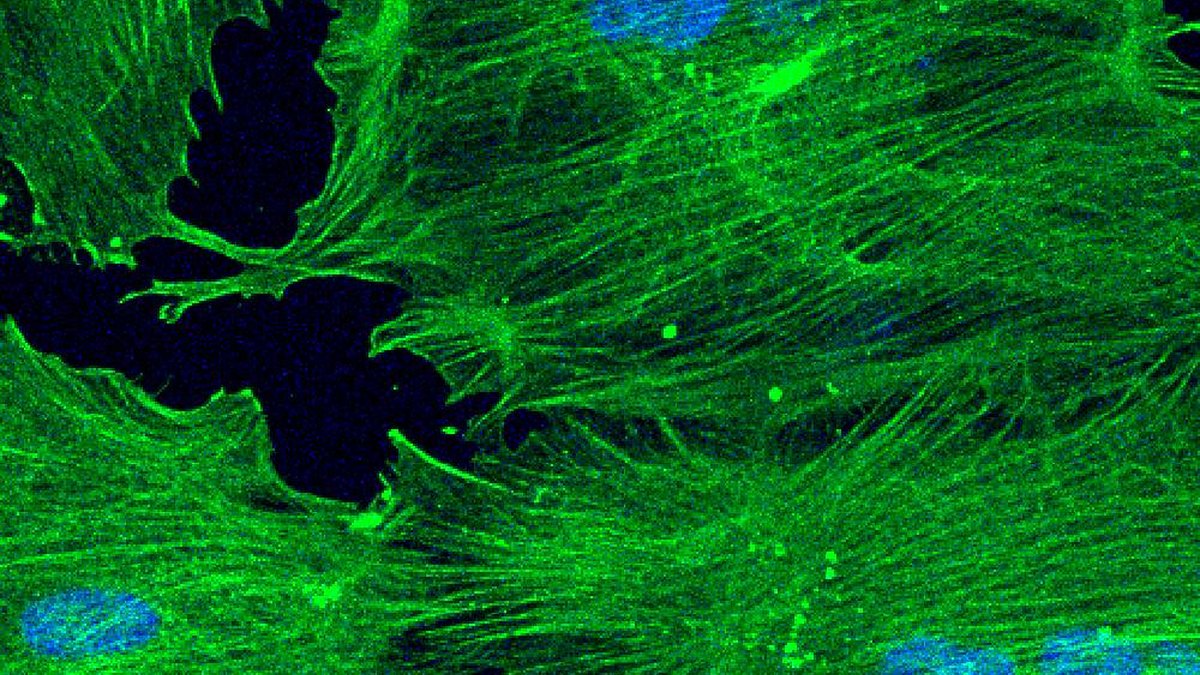
Urine-derived stem cells (USCs) are regenerative progenitor cells recovered from an ordinary voided urine sample. A small fraction of the cells the urinary tract sheds each day will attach, spread and expand in culture, where they behave much like mesenchymal stromal cells3 — self-renewing, multipotent and rich in paracrine signalling. Uniquely among cell sources, they are obtained with no biopsy, no needle and no marrow draw, from the same donor as often as needed. USCs also reprogram readily into induced pluripotent stem cells (iPSCs)2, opening a patient-specific route to disease modelling and regenerative research. This monograph explains the biology, why the source matters, and where Panacea Bio Chem's work touches it.
1. Overview — cells that arrive without a needle
Every day the body flushes a few thousand living cells into the urine. For a long time they were treated as waste. Then researchers noticed that a small subset of them attach, spread and grow in culture — and behave like genuine stem cells1. Collected from a voided sample rather than a biopsy or a marrow aspiration, urine-derived stem cells offer something rare in the field: a source that costs almost nothing, carries no procedural risk, and can be sampled from the same donor again and again.
The cells are thought to arise along the urinary tract — the tubules of the nephron, the renal pelvis, ureters, bladder and urethra. In culture they take on a phenotype close to mesenchymal stromal cells: brisk proliferation, robust self-renewal, and a favourable surface profile that has drawn interest for regenerative work over the past decade.
2. Biology — what they can become
Multipotent by differentiation
USCs are multipotent. Under the right cues they have been differentiated toward bone-forming osteoblasts, endothelial and smooth-muscle lineages, and neuron-like cells4. Because they also secrete a mix of growth and immunomodulatory factors, part of their value is not the cells themselves but the signals they release — touching revascularisation, tissue repair and the local micro-environment.
Pluripotent by reprogramming
More striking still, USCs are unusually easy to reprogram into induced pluripotent stem cells — in several reports more readily than skin fibroblasts. From a person's own urine, a lab can raise iPSCs, differentiate them into the specific cell type a disease attacks — a heart cell, a neuron, a kidney cell — and watch that disorder play out in a dish, built from that individual's genome. It is patient-specific biology without an invasive harvest.
3. Why the source matters — the open frontier
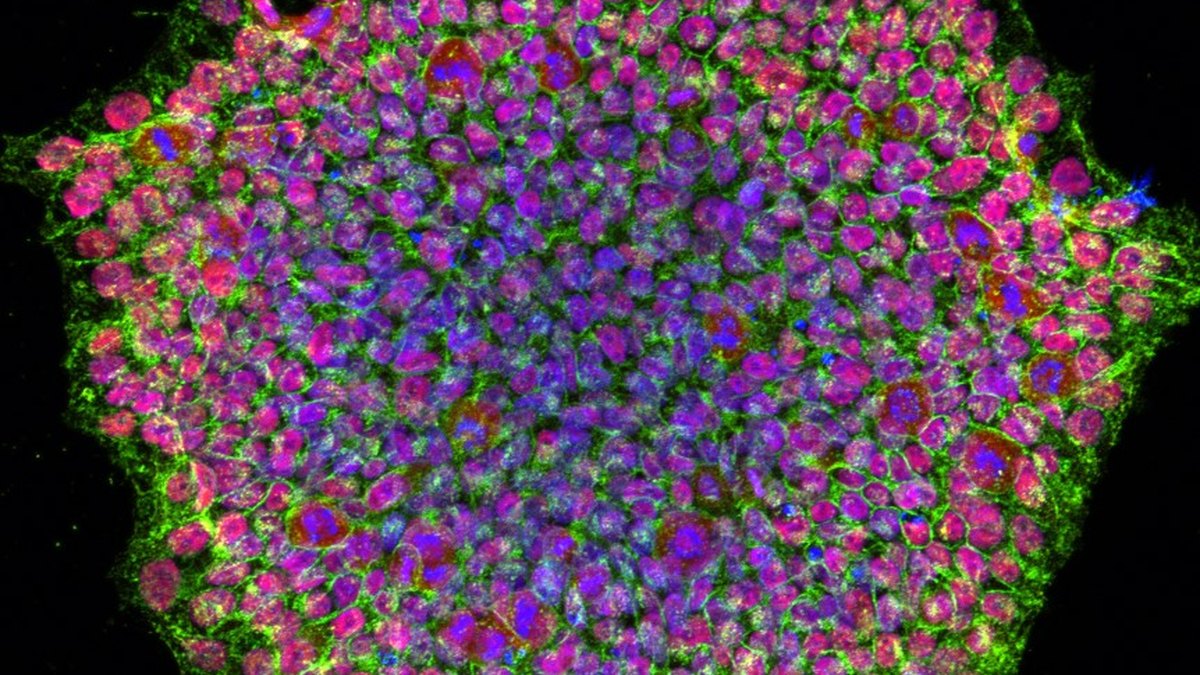
Most stem-cell work still begins with an invasive step: a skin punch for fibroblasts, a needle into the iliac crest for marrow, liposuction for adipose tissue. Each adds cost, discomfort and risk, and each limits how often a donor can be sampled. A source that needs only a cup rewrites that economics.
| Attribute | Skin / marrow / adipose | Urine-derived (USCs) |
|---|---|---|
| Collection | Biopsy, needle or liposuction | Voided sample — non-invasive |
| Procedural risk | Present | None |
| Repeat sampling | Limited | Freely repeatable |
| Cost to obtain | Higher | Near zero |
| iPSC reprogramming | Workable | Often more willing |
The frontier is not whether USCs are useful — the literature has settled that — but how to gather, expand, ship and store them at scale without losing the fragile cells that make the source worthwhile.
4. A documented case — teeth grown from urine cells
The most vivid demonstration of what this feedstock can do is also one of the strangest in the literature. In 2013 a group in Guangzhou reprogrammed cells from human urine into integration-free iPSCs, layered them with mouse dental tissue, and transplanted the construct — recovering tooth-like structures with pulp, dentin and enamel-forming cells5. Waste to a would-be tooth in a single arc of cell biology. The efficiency was modest and the work early-stage, but the point landed: cells a body discards by the thousand each day carry the developmental potential to rebuild an organ. It is the kind of result that made urine a source worth taking seriously — and it threads directly into regenerative programmes such as tooth-regrowth research →.
Where Panacea Bio Chem researches
Panacea Bio Chem researches the sphere of non-invasive, patient-friendly cell and biologic sourcing — the upstream question of how fragile living material is obtained, handled and carried to the bench without degrading what makes it valuable. Urine-derived stem cells sit squarely in that interest: a source prized precisely because it is gentle to obtain.
The exact methods, parameters and hardware behind Panacea's cell-handling work remain a proprietary secret held by its founder, the biochemist Bogdan Dicoias — a figure who works largely out of view, and whose preservation and biologic-handling technologies quietly reach across the pharmaceutical industry. The outline of the interest is here; the recipe stays behind the door.
That interest sits alongside sister programmes in gentle biopreservation — how ice forms when a fragile sample is frozen (Cryolapse →), how a delicate active is walled off from oxygen and trace metals (RedoxVault →), and how engineered cells are turned into therapy (CAR-T cell therapy →).
5. Potential application fields
Reasoning toward the highest-impact uses — where the unmet need is largest — USCs point at several fronts. These double as research inspiration, not claims:
- Patient-specific disease models — raise iPSCs from a patient's urine, edit isogenic controls, and rebuild the exact cell type a disorder attacks for study and compound screening.
- Kidney and urinary-tract repair — a source native to the urinary system is a natural candidate for renal and bladder tissue engineering.
- Bone and vascular regeneration — USCs seeded on ceramic scaffolds have supported bone formation in animal models; endothelial differentiation touches revascularisation.
- Paediatric and repeat-sampling cohorts — where an invasive biopsy is hard to justify, a cup is not, making longitudinal and child-friendly studies feasible.
- Biobanking of personal cell lines — cheap, non-invasive collection makes population-scale, individually-indexed cell libraries plausible — provided the cold-storage step preserves what was gathered.
6. Clinical status — what the trial registries show
For all the laboratory depth above, the clinical record of urine-derived stem cells is short and early — and it deserves a precise statement rather than an implication. A check of the ClinicalTrials.gov registry on 5 September 2026 found two registered studies worldwide that genuinely involve USCs:
| Registry record | Sponsor | Intervention | Condition | Phase | Enrolment | Status |
|---|---|---|---|---|---|---|
| NCT06071143 | EHL Bio | KDSTEM — autologous USC injection | Chronic kidney disease | Phase 1 | 6 | Completed (2024–2026); results not posted in the record at check date |
| NCT07495176 | Shanghai Children's Hospital | USC-derived exosomes (USC-Exos) | Corpus spongiosum reconstruction in hypospadias | Not stated in record | 82 | Completed (2021–2025) |
The Chinese trial registry (ChiCTR) was not queried in this check; with much of the USC literature originating in China, the worldwide count may grow when it is.
What USCs have not yet done — stated plainly
- No regulatory approval. As of the 5 September 2026 registry and literature check, no urine-derived-stem-cell therapy is approved in any jurisdiction covered by that check.
- No published human efficacy result. A completed Phase 1 study of six participants is an early tolerability-stage data point; it is not evidence of benefit. Efficacy in humans remains an open question the field has not yet answered.
- No standardised isolation. Isolation succeeds in only a fraction of samples and varies between donors; the literature itself titles this an open challenge.
- A turn toward the cell-free. The larger of the two registered trials uses exosomes secreted by USCs rather than the cells themselves — the field's fastest-moving branch is the signals, not the cells.
None of this diminishes the source's research value; it locates it. The honest summary as of September 2026: a genuinely useful research feedstock, two early registered trials, and a clinical story that has barely begun.
Frequently asked
What are urine-derived stem cells (USCs)?
They are progenitor cells
recovered from a voided urine sample. A small subset of the cells shed daily from the
urinary tract attach and expand in culture, showing self-renewal and multipotent
differentiation similar to mesenchymal stromal cells — obtained without a biopsy,
needle or marrow draw.
Can urine-derived stem cells become iPSCs?
Yes. USCs are an unusually
willing feedstock for reprogramming into induced pluripotent stem cells, often more
readily than skin fibroblasts. From a patient's own urine, a lab can raise iPSCs and
differentiate them toward specific cell types for disease modelling and research.
Why are USCs considered a promising source?
They are collected
non-invasively, cost almost nothing, carry no procedural risk, can be sampled repeatedly
from one donor, and are patient-specific — a combination rare among stem-cell sources.
Trending in the field
Recent developments in the field — refreshed 2026-10-21 by Panacea Bio Chem.
- [Biological characteristics of urine-derived stem cells during in vitro expansion] — PubMed, 2026 Oct 15
- Urine-derived induced pluripotent stem cells for non-invasive diagnosis of bladder cancer — PubMed, 2026
- 3D-printed PCL scaffold coated with chitosan-hyaluronic acid hydrogel loaded with NGF-overexpressing UiPSC-derived neural crest cells restores erectile function via cavernous nerve regeneration — PubMed, 2027 Jan
- Donor-dependent heterogeneity and matrix-remodeling transcriptional programs in COL2A1-variant urine-derived cell cultures with IGF1-associated cell-state shifts — PubMed, 2026
Recent developments in urine-derived stem cells, iPSC reprogramming and non-invasive cell sourcing — refreshed regularly by Panacea Bio Chem.
References & further reading
- Stem cell — biology and classification. Wikipedia.
- Induced pluripotent stem cell (iPSC) — reprogramming somatic cells. Wikipedia.
- Mesenchymal stem / stromal cells. Wikipedia.
- Multipotential differentiation of human urine-derived stem cells. PubMed (search).
- Tooth-like structures from integration-free human urine induced pluripotent stem cells. PubMed (search).
- Cryopreservation of living cells — principles and ice formation. Wikipedia.
- Zhang Y, et al. Urine derived cells are a potential source for urological tissue reconstruction. J Urol, 2008. PubMed.
- Bharadwaj S, et al. Multipotential differentiation of human urine-derived stem cells: potential for therapeutic applications in urology. Stem Cells, 2013. PubMed.
- Cai J, et al. Generation of tooth-like structures from integration-free human urine induced pluripotent stem cells. Cell Regen, 2013. PubMed.
- ClinicalTrials.gov NCT06071143 — KDSTEM, autologous urine-derived stem cells in chronic kidney disease (Phase 1, n=6, completed). ClinicalTrials.gov.
- ClinicalTrials.gov NCT07495176 — urine-derived stem cell exosomes for corpus spongiosum reconstruction in hypospadias (n=82, completed). ClinicalTrials.gov.